
HOME |THE SOCIETY | NEWS | ABOUT FIDELMA | THE GUIDE/FAQs | THE AUTHOR | THE BOOKS | THE STORIES
FOREIGN EDITIONS | THE FÉILES
| THE CRITICS | PRONUNCIATION
| CONTACT US
FÉILE FIDELMA 2019
SEPTEMBER 6-8, 2019 IN CASHEL, CO TIPPERARY

PHOTOS OF LECTURES, EXCURSIONS, AND OTHER EVENTS
FROM OVER A DOZEN COUNTRIES!
)
|
Programme - Féile Fidelma 2019
Saturday, 7th September - The Brú Ború Cultural Centre
Followed by entertainment - it is hoped traditional Irish music and dance performed by local children's school traditional musicians and dances. Sunday, 8th September - The Brú Ború Cultural Centre
Coach trip to The Vee Road (St Declan's Way) at the Knockmealdown Mountains, seeing the site of Clogheen (Cloichán) the location of the murders in Blood in Eden. This will depend on interest of attendees.
It is now a tradition that attendees, those staying on in Cashel on Sunday evening, meet at a designated restaurant for an informal meal and gathering.
|
)
)
)
)
)
)
)
)
)
)
)
)
)
)
)
)
)
)
)
)
)
)
)
)
)
)
)
)
)
)
)
)
)
)
)
)
)
)
)
)
)
)
)
)
)
)
)
)
)
)
)
)
)
)
)
)
)
)
)
)
)
)
)
)
)
)
)
)
)
)
)
)
)
)
)
)
)
)
)
)
)
)
)
)
)
)
)
)
)
)
)
)
)
)
)
)
)
)
)
)
)
)
)
)
)
)
)
)
)
)
)
)
)
)
)
)
)
)
)
)
)
)
)
)
)
)
)
)
)
)
)
)
)
)
)
)
)
)
)
)
)
)
)
)
)
)
)
)
)
)
)
)
)
)
)
)
)
)
)
)
)
)
)
)
)
)
)
)
)
)
)
)
)
)
)
)
)
)
)
)
)
)
)
)
)
)
)
)
)
)
)
)
)
)
)
)
)
)
)
)
)
)
)
)
)
)
)
)
)
)
)
)
)
)
)
)
)
)
)
)
)
)
)
)
)
)
)
)
)
)
)
)
)
)
)
)
)
)
)
)
)
)
)
)
)
COMMENTS FROM FÉILE FIDELMA 2019 ATTENDEES
Elaine Kennedy
All the speakers had something to offer, but my favourites were the 'Love Poetry' performed by Caro-line and Oliver and Kevin Murray's talk about 'Sex and Marriage in Fidelma's Time'. I could listen to Kev-in speak for hours on end; he puts things over so well and is both informative and entertaining. Caro-line's delivery brought the poetry and the poets to full, earthy life and I only wish there could have been more of it.
"The Camino Voyage" would probably not have been seen by most of those attending from out-side Ireland, so it was wonderful to have that shown and also to have the director there to talk to us. The dinner was, as always, a great social occasion with very good food and service. All in all, 2019 was a Féile to remember. The best part is always catching up with old friends and making new ones, and we certainly did that!
Reidun Drange
Why do I return to Cashel and Féile Fidelma time and time again? For me it is like an extended family gathering combined with a weekend filled with intellectual content. Lectures on a lot of subjects gives me knowledge. This knowledge makes it easier to understand the background for the Fidelma and Eadulf books. My favorite lecture this time was "Sex and marriage in Fidelma's Ireland" by Kevin Murray.
The coach trip to the Vee Road was nice and gave me an insight in the background for Blood in Eden. In my imagination I saw Fidelma and Eadulf come riding down the winding path to the lake. Es-pecially did I see Eadulf longing to be home soon and not to be on horseback anymore.
The greatest lecture in my opinion was the love and care I was met with when I became ill. People were sincerely worried for me. I really value that highly.
And should there be another Féile Fidelma in two years' time I would love to attend to meet with my fellow nerds (nerds in the utmost positive definition) yet again.
Kate Clayton
The 2019 Féile, in my opinion, was the best yet, there were many reasons for this.
I made new friends from all over the globe and enjoyed catching up with old ones. Talks by guest speakers were entertaining and informative. I especially enjoyed the showing of the film "The Camino Voyage" which cleverly linked adventures in our time to those in Fidelma's, reminding us all of the wonder and perils of the sea.
On the coach trip and visit to Clogheen, we saw beautiful views and one of the routes Fidelma followed in Blood in Eden, which brings it all to life, now I am reading the book.
Can't wait for Féile 2021!
Hervé Latimier
It was the first time for Naig and me to attend the Féile. Like David says we found it "both enjoyable and educational."
The lecture we liked the most was Kevin Murray's. The other talks were all very interesting too, although we found John G. Dwyer's was a bit too fast for non-English speakers.
It was very pleasant to talk with other "Fidelmaniacs" (although Naig is not a true one yet... ) of so many countries about a lot of things (not so often about Fidelma, I'm afraid...) during the tea/coffee breaks and the Gala Dinner.
We were pleased with the film "The Camino Voyage" in spite of some parts that seemed too long, and very pleased with the place of Irish language in it.
The coach-trip to Declan's Way and Cloichán was interesting and the view from the Vee amazing. I read Blood in Eden as soon as I was back home...
We knew Cashel for we visited the town twice during previous trips in Ireland. We didn't know Brú Ború Centre and its Museum (too new). We know now. We had not visited the Folk Museum. It's done.... Very interesting as well as the commentary.
Special thanks to Eleanor, Emily, and Sean. To David too. And, of course, to Peter who kindly signed about twenty copies of The Dove of Death and Behold a Pale Horse translated into Breton on Friday morning...
Christine Grit
Though it was the first Féile I ever attended, I've visited the Rock of Cashel itself three times before. I love visiting the place, despite the fact that the remaining buildings derive from a somewhat later time than the period depicted in Fidelma's world. Even if I hadn't enjoyed the Féile, the trip to Ireland would have been worthwhile because of the superb location (and it also made it possible to visit a friend of mine who lives about an hour's drive from Cashel).
However, I did enjoy the Féile, and in fact all the talks. I was pleased when, during the first evening, Peter chose my question to answer - and he took his time educating everybody in the process - although I still don't know whether the character I referred to will ever take part in one of the Fidelma mysteries. A very smart way of taking a question very seriously but not limiting himself in his own choice of characters and stories! I took away something from all the talks on the Saturday and Sunday, if only because the themes under discussion were presented in such an interesting manner. All speakers did a great job.
To be honest I am now slightly less positive about the Brehon law system than I used to be, although it still wins with flying colours compared to Roman law with regard to women's rights. This little disappointment was compensated for by the lovely poems recited. It's just great to hear these rather explicit celebrations of love (and the humour too). The film of the rowers turned out to be a real highlight - I actually had to brush away a few tears near the end.
Lastly, I must say we were well taken care of food-wise, and it was of course just lovely to listen some music too. All-in-all it was a great experience and I'd like to attend another Féile in the future!
Peter Tremayne
For me, this was a very special Féile. It was great to see so many old friends and to welcome so many newcomers who, after they departed, I hope they feel old friends as well. There seems a special camaraderie about the Fidelma Society and those who come to Cashel. I see it as more of a family gathering. I was especially delighted that this year the Féile was opened by "The Voice of Fidelma" herself - Caroline Lennon - who has now recorded for audio all (30) Fidelma titles to date. The weekend seemed so seamlessly put together in spite of last-minute changes that had to be made in the sched-ule. And the fact that two of the committee were absent. Seamus King was in hospital in Cork and I am glad to report he is back homeland doing well. Olivia Quinlan whose mother had become ill and I wish her well. Special thanks must therefore go to the remaining committee members - Eleanor Dwyer, Emily Kirwan, and Se"n Laffey - all of whom pulled out all the stops to make this Féile really remarka-ble.
Then, of course, there was David. David's input in his publicity campaigning, his constant reminders to members of the Society, his impeccable production of the Féile Souvenir Programme Booklet, his tireless work over the year to get registrants was truly impressive. It was even more impressive when - and I am sure he will not mind me mentioning this - health has been an issue with him over the year with surgeries (yes, plural) and ensuing health problems. I am happy to say that he is in recovery mode, and for those who expressed their concern during the Féile, I can assure you he will be chasing you for your membership fees for some time to come as well as putting out THE BREHON journal and the Fidelma website as he has done for the last eighteen years.
I am always impressed at the standard of speakers. This year was particularly high; from Nancy (whose analysis of my books was so good for my ego), to Kevin (who I wished had been my tutor when I was doing Celtic Studies), to Patrick, John and Oliver. And, of course, D"nal - Ceilleachair, the director of "The Camino Voyage", who came to introduce his film and answer questions. Wonderful stuff.
I admit to bias when I say this was the best Féile Fidelma yet and while each of these weekends, from the first in 2006, has developed and strengthened, it is hard to see how they could get any bet-ter. What more can I say but - thank you, one and all, for supporting my work
FÉILE FIDELMA 2017
SEPTEMBER 8-10, 2017 IN CASHEL, CO TIPPERARY
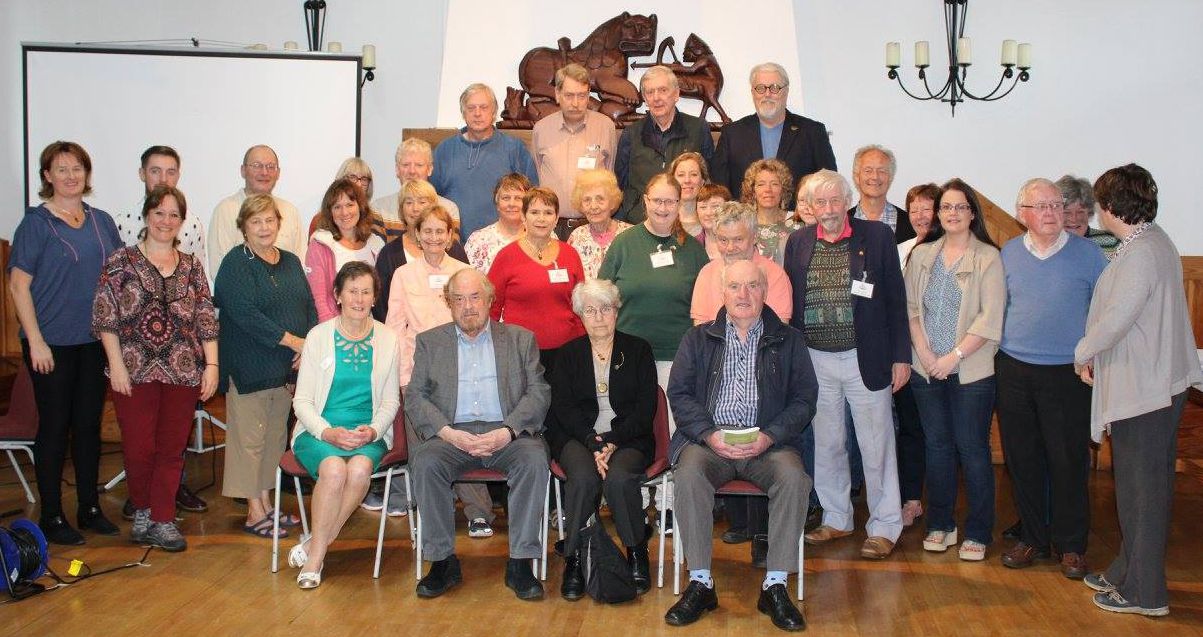
CELEBRATION OF IRELAND'S INTERNATIONAL BESTSELLING HISTORICAL CRIME MYSTERY SERIES THE FIFTH FÉILE FIDELMA, 2017, HELD IN CASHEL, CO. TIPPERARY EXTENSIVE PHOTO ALBUMS AVAILABLE ON THE SOCIETY'S FACEBOOK PAGE
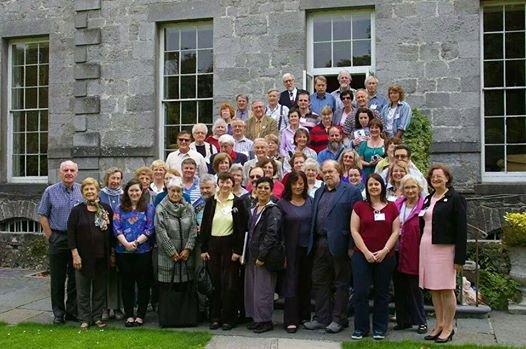
CELEBRATION OF IRELAND"S INTERNATIONAL BESTSELLING HISTORICAL CRIME MYSTERY SERIES THE FIFTH FÉILE FIDELMA, 2014, HELD IN CASHEL, CO. TIPPERARY
Among experts who spoke were:
Details and lots of photos will follow soon... If you are on Facebook, you will find additional photos on the Cashel Arts Fest page as well as The International Sister Fidelma Society page...
)
)
)
)
)
)
)
)
)
)
)
)
)
)
)
)
)
)
)
)
)
)
)
)
)
)
)
)
)
)
)
)
)
)
)
)
)
)
)
)
)
)
)
)
)
)
)
)
)
)
)
)
)
)
)
)
)
)
)
)
)
)
)
)
)
)
)
)
)
)
)
)
)
)
)
)
)
)
)
)
)
)
)
)
)
)
)
)
)
)
)
)
)
)
.jpg', 'a310653837_1542837015928713_3160352906485531610_n2028129', 'width=980,height=750,toolbar=no,menubar=no,status=no,scrollbars=no,resizable=no'))
)
)
)
)
.jpg', 'IMG_055420281024x76829', 'width=1044,height=798,toolbar=no,menubar=no,status=no,scrollbars=no,resizable=no'))
)
FÉILE FIDELMA 2012!: SISTER FIDELMA'S WORLD AT CASHEL
September 7-9, 2012
)
) The fourth Feile Fidelma was held in the Palace Hotel, Cashel, Co. Tipperary on the weekend of September 7-9, 2012. It was regarded
as a most successful event by the organisers and participants alike and they were unanimous in their opinion that another similar weekend should be held in two years time. This decision will rest with Cashel Arts Fest but the indications are fairly strong that it will be favourable.
The fourth Feile Fidelma was held in the Palace Hotel, Cashel, Co. Tipperary on the weekend of September 7-9, 2012. It was regarded
as a most successful event by the organisers and participants alike and they were unanimous in their opinion that another similar weekend should be held in two years time. This decision will rest with Cashel Arts Fest but the indications are fairly strong that it will be favourable.
The weekend brought together a number of old friends of Cashel, some of whom have attended all the earlier events devoted to the novels of Peter Tremayne, but also an encouraging number of new Fidelma fans. Numbers were down somewhat on previous years but were good in the current world economic climate. In all. twelve countries were represented.
One of these old friends was Hans van den Boom, the Dutch publisher of Fidelma, who has never missed a Féile. He is a great friend of the event and supplies it with posters and publicity material. He had a very important announcement to make. His publishing company, Leeskamer, intend to bring out the Fidelma novels in graphic form. The company is already working on the graphics and will publish in three languages, Dutch, English and Spanish, simultaneously in the new year. This is an exciting new venture and should attract a completely new constituency of readers to the novels.
Another old friend, who attended with a party of four from Argentina, was Maggie Tolderlund. Maggie is the publisher of Fidelma in Buenos Aires and has never missed an event since the first in 2006. Her visit this year was much appreciated in the light of the very difficult economic situation in Argentina at the moment.
Rose Nabholz came all the way from Arkansas for her third Feile. She had to put her two dogs in care while she was away. Rose is a great fan of Kilkenny hurling and was delighted to be here for the All-Ireland final, which was played on the Sunday. Over eighty thousand attended and unfortunately for Rose all her team could achieve was a draw with Galway and they will have to play again on September 30. Rose's disappointment wasn't shared by many because Kilkenny have won so much over the past ten years that the vast number of hurling fans are looking for a change. The game of hurling features in one of the Fidelma novels, A Prayer of the Damned (2006), pp. 126-129.
A first timer to Cashel was Richard M Vielbig of Auburn, California. He was the winner of a draw among participants who had registered for Cashel by May 1. Thirty-one people had done so and Richard was the lucky winner of a personalized signed copy of the uncorrected proofs of The Seventh Trumpet, published in 2012 and of the Novella, The Night of the Snow Wolf, published in 2011. He was presented with his prize by Peter during the weekend.
)
) The Speakers
The Speakers
The format of Féile Fidelma is well-established by now. It takes place in the Palace Hotel, which was built in 1730 for the Church of Ireland bishops of Cashel. It became a hotel in 1962 and is an outstanding venue for the event.
The formalities commenced on Friday evening with registration and the distribution of information packs at 6 pm and this was followed by a reception. The formal opening of the weekend took place at 8 pm. The Mayor of Cashel, Dr. Sean McCarthy, who formally opened the event was welcomed by Petronelle Clifton Brown, the chair of Cashel Arts Fest Committee, the organising body of the weekend. The Mayor was high in his praise of the work of Cashel Arts Fest and its promotion of the Feile Fidelma Weekend. He was impressed with its benefits to the economic life of the town. Also in attendance was Councillor John Crosse, chairman of South Tipperary County Council.
The first speaker of the weekend is always the author himself, Peter Tremayne, and his talk is chaired by that great friend of Féile Fidelma, David Wooten, the Director of the International Sister Fidelma Society, who does enormous work in publicising the event. This is not really a talk but a question and answer session. David collects a number of questions beforehand, which Fidelma fans as well as participants at the weekend would like to put to the author. It's a wonderful occasion for establishing a rapport between the writer and his readers. There were some quite tricky questions but Peter answered them all with aplomb and erudition.
The historical background to the Fidelma Mysteries, based as they are in seventh century Ireland, is always treated on the weekend and this year was no exception. The choice of Dr. Damian Bracken of the history department, U.C.C. was an inspired one. He spoke of the conflict between Rome and the early Irish Churches and doing so showed how the superior attitude of the Roman Empire towards peripheral geographical areas was adopted by the Roman Church towards places like Ireland, who were very much on the periphery and liked doing their own thing.
Cora Harrison is a writer who is living in Co. Clare and the author of a crime series featuring a female Brehon, Mara, in the sixteenth century. This is a period in the history of Ireland when the Brehon Law period was coming to an end and English Law was taking over. The Brehon Law still existed in rural areas and the Burren Series (which she launched in 2007) deals with the conflict between the old and the new. Cora has seven mystery novels to date in the series.
The third speaker on Saturday was Neil Donnelly, who was returning for a second year. At the previous Féile he dramatized Peter Tremayne's short story, Invitation to a Poisoning, which was presented as a rehearsed reading. This year he spoke of the problems of adaptation. After he had spoken about how he saw Absolution By Murder being adapted, he went on to raise the question of how the Fidelma books were not widely known in Ireland due to lack of promotion.
) Also returning was Anna Heusssaff and she opened the proceedings on Sunday morning with the provocative
title 'Is Fidelma a Real Woman?' She analysed the character of Fidelma and this led to an interesting discussion. The general consensus was that Peter had produced a credible female character with the exception of Fidelma's lack of chat about dresses and her son. A member of the audience pointed out that in Badger's Moon, Fidelma seemed to suffer from post natal depression and the author confirmed this, pointing out during several books, Eadulf had chided Fidelma for her lack of interest. There were,
of course, passages about Fidelma's dress in Dancing With Demons and later works.
Also returning was Anna Heusssaff and she opened the proceedings on Sunday morning with the provocative
title 'Is Fidelma a Real Woman?' She analysed the character of Fidelma and this led to an interesting discussion. The general consensus was that Peter had produced a credible female character with the exception of Fidelma's lack of chat about dresses and her son. A member of the audience pointed out that in Badger's Moon, Fidelma seemed to suffer from post natal depression and the author confirmed this, pointing out during several books, Eadulf had chided Fidelma for her lack of interest. There were,
of course, passages about Fidelma's dress in Dancing With Demons and later works.
A new voice was that of Cormac Millar (aka Cormac - Cuilleanáin and a professor of Italian at Trinity College, Dublin) who is a crime writer in his spare time and is working on his third novel at the moment. He gave us a comprehensive round-up of 'Some Clerical Heroes and Villains in Crime Fiction.'
Critical Study of the Sister Fidelma Novels
The final speaker was the Director of the International Sister Fidelma Society, David Wooten, who spoke about the Society but spent a good lot of time lambasting Headline (Ireland), the publishers of the Fidelma Mysteries, for their non-existent support for Féile Fidelma. He had also some largesse to distribute in the form of book prizes for winners in a quiz on the novels he had set for the participants. The prizes awarded were in the form of bFidelma ooks, supplied by Peter's US publishers. We even had 2 contestants who scored 100% on what was not an easy test.
One of the most important pieces of information he had for the audience was the arrival of a major academic work about the Sister Fidelma Mysteries, which was recently published by academic publishers, McFarland & Company Inc., Jefferson, North Carolina and London. Entitled The Sister Fidelma Mysteries: The Historical Novels of Peter Tremayne, is a collection of twenty essays, edited by Professor Ed Reilly and David Robert Wooten. Included in the essays is one on the origin and history of Féile Fidelma by Seamus J. King. The book retails for $40 and is a wonderful addition to our knowledge of the Fidelma Mysteries as well as a very important reference book. An advance copy of the book was presented by David to the author.
The Feile weekend wasn't all work but was leavened by a good amount of social contact and camaraderie. One of the high points of the weekend was the Féile dinner, which took place on Saturday evening and was a most relaxing occasion. One of the features of it was a light-hearted speech by Peter which this year concentrated on slagging off his critics.
|
|
) Another place which is conducive to bonhomie and good fellowship is the Cellar Bar in the hotel, where Denis Heffernan reigns. Anyone who hasn't
met this man will find it difficult to imagine what kind of unique character he is. He is first of all a barman but he is also an entertainer. When his customers have been served he can make his way outside the bar and sing to them from a large repertory of songs. One of his favourites is 'Cashel, My Home Town', his own composition with which he loves greeting and welcoming people to his town.
Another place which is conducive to bonhomie and good fellowship is the Cellar Bar in the hotel, where Denis Heffernan reigns. Anyone who hasn't
met this man will find it difficult to imagine what kind of unique character he is. He is first of all a barman but he is also an entertainer. When his customers have been served he can make his way outside the bar and sing to them from a large repertory of songs. One of his favourites is 'Cashel, My Home Town', his own composition with which he loves greeting and welcoming people to his town.
David had this wonderful idea that, after the formal remarks at the official opening were complete, he would have Denis sing his favourite song. But, alas, he found out on arriving to Cashel that Denis was away for the weekend at a family wedding in London. He was definitely missed but promised when he returned on Monday that he would never be absent again for Féile Fidelma.
Rathnadrinna
An unusual feature of the weekend was a visit to an archaeological site about two miles from Cashel. Called Rathnadrinna, it is a four-ringed earthen fort, the kind used during Celtic times as a fortified homestead. What makes this one unique is its four rings or banks. Most are only one or two-ringed.
Local archaeologist Richard O'Brien has been investigating this for a number of years, because there is little or no written record about it. Because of its size it is believed to have been an assembly area or it may have been used for ceremonial purposes. At any rate, Richard started a dig there this summer and he had much to relate when we visited it on Saturday afternoon.
The interest for Fidelma fans is that it features in four of the Mysteries. It houses a tavern and Fidelma and Eadulf drop in there for a drink on their way back to Cashel. Ferloga and his wife, Lassar, are the proprietors of the tavern. Richard informed us of the purpose of the fort and what his excavations, which have only started, have revealed to date.
It was a beautiful day for the visit, as in fact was the weather for the complete weekend. The sun shone, which isn't a usual occurrence in Ireland with its changeable weather system. In the centre of the fort during the visit the sun was warm, the sky was clear and there was no desire to be anywhere else.
|
|
FÉILE FIDELMA 2010!: SISTER FIDELMA'S WORLD AT CASHEL
September 10-12, 2010
) |
 The Third Feile Fidelma was held in the Cashel Palace Hotel, Cashel, Ireland from 10-12 September and it was regarded as a huge success. Close to fifty people, representative of nine different
countries, attended. Norway was represented for the first time.
The Third Feile Fidelma was held in the Cashel Palace Hotel, Cashel, Ireland from 10-12 September and it was regarded as a huge success. Close to fifty people, representative of nine different
countries, attended. Norway was represented for the first time.
The Cashel Arts Fest committee, who organise the event in conjunction with the International Fidelma Society, had initial reservations about organising the festival, given that the world economic state had deteriorated so much since the last one was held in 2008. They set a target of forty participants and were delighted with the response. In fact forty-two people in all registered but three dropped out due to illness close to the event.
What was encouraging about the registrants was the number returning for the second and third time. We had people like Hans van den Boom and his friends from the Netherlands, Maggie Tolderlund and her family from Argentina, Rose Nabholz and Patrice Wells from Arkansas and Wisconsin respectively, Ulla Trenter Palm and her daughter, Laura, from Sweden, Catherine Green from England, Marie Soteriades from Canada, among others.
However, such events cannot live on past patrons alone but must also generate new business and we had great new people who became part of the group immediately. Jim Moloney and Leslie Watson travelled from California, the Farrises from Texas, Marilyn Pirkle from New York, the Davises from Alabama, Tom O'Brien from Pennsylvania, who beat David Wooten for height, and his wife, Anne, Reidun Drange from Norway, and others also.
An Intimate Occasion
What was remarked upon by many was the intimacy of the occasion. More people became more closely acquainted with one another than at the previous events. Why this should be the case wasn't quite understood, but a camaraderie evolved over the weekend which made everyone feel at home and welcomed by everyone else. There was a great intimacy about the occasion which made the leaving of it quite difficult as the group broke up on Sunday afternoon and Monday.
As David discovered when he did the poll of members on the website, travellers to Cashel voted the Cashel Palace Hotel as the best venue for the event. For anyone unfamiliar with it, the hotel was originally a bishop's palace, built in 1725. It's a beautiful building, small and intimate and the crowd are thrown together much more than they would be in a bigger, modern establishment. As well, the bar, which is a vital part of any Irish get-together, is in the basement and not very large. People are thrown together in a small space and the place is fortunate to have an extraordinary barman, Denis, presiding over the place. He leaves his place of work behind the bar occasionally in order to break into song and he has a fine voice and a good repertoire as well. In fact he has also written a song, "Cashel: My Hometown," which hasn't been officially launched but was unofficially recorded by a number of phones on Sunday night. Click here for a video of this beautiful song. At any rate, Denis is a huge attraction in the hotel and did much to bring the group even more together.
Serious Side
To date I have been talking about the social side of things but the weekend had a serious purpose also. People who registered came to Cashel to meet the author and learn more about the mystery novels he has written. Peter Tremayne would be voted the most accessible of authors and he was at the beck and call of all the participants over the weekend.
On Friday evening he addressed the attendance after the Mayor of Cashel welcomed everyone to the event. Later he gave the first talk, which was chaired by David. In fact it was a question and answer session, which was a new development this year. David had collated questions beforehand from members of the Society and Peter answered them and it was a great success.
The weekend always includes a substantial academic input and this year was no exception. Professor Padraig - Riain of University College, Cork spoke of the Psalter of Cashel. A most erudite man he also revealed that he is no musty intellectual but is an excellent communicator and he made difficult academic information accessible to all.
This was followed by a totally contrasting presentation. Caroline Lennon is an actress, who has recorded about seventy audio books, among them a number of Peter's works. Her talk was on the experience of 'Reading Sister Fidelma' and she made a big impact, probably fitting one's image of what the main character in the novels was like!
Invitation to a Poisoning
Caroline also had a part to play in the next item on the program, a dramatised reading of Peter's short story, 'Invitation to a Poisoning'. This was a new dimension to the weekend and it went down a treat with the participants. Seven actors were drafted in from the local drama group, Cashel Choral and Dramatic Society, to do the reading together with Caroline, doing the part of Sister Fidelma. The group were taken in hand by professional producer, Neil Donnelly, who brought them to a level of perfection, which was amazing in such a short time. Everyone enjoyed the production and the general consensus is that such a production must be part of future programs.
In the afternoon the group left the confines of the hotel for a walk about the town. They were guided on this by local archaeologist, Joanne Hughes, and they learned quite a lot about Cashel as a medieval town.
One of the highlights of the weekend is the gala dinner and the hotel did an outstanding job on it. All were of the opinion it was a great repast and the level of conversation got louder as the meal progressed, testament to the satisfaction everyone felt and, of course, helped by the wine. At the conclusion of the meal I said a few words of appreciation of the group and proposed a toast to them, to which Peter suitably replied.
We were to commence the Sunday morning program with the Italian publisher of the novels, Luigi Sanvito, but he was unable to attend. Instead we moved Anna Heussaff into the first slot with 'Fidelma and the Irish Language'. Anna gave us a most interesting talk on the fate of the Irish language and the failure to translate the novels into the language, which Fidelma would have spoken in her time.
Then as an alternative to the talk by Luigi Sanvito, we drafted in Ulla from Sweden, Hans from the Netherlands and Maggie from Argentina, all of whom have translated the novels into their respective languages. They spoke of the problems of translation and their contributions were wonderfully received. In fact the stuff of future lectures could be found in any one of them!
The final talk was by David on The International Sister Fidelma Society, and he brought the audience up to date with the work that he has been doing. It is only when you listen to David you realise how essential to the work of promoting the novels is the Society. As well as the website the Society also publishes the 'Brehon' three times a year and keeps people informed about the world of Peter and the progress of the novels.
Though the event formally ended early Sunday, some of the group were treated to a personal tour of the Rock of Cashel by Peter Tremayne himself later that afternoon - always a delight. For the most part, the staff of the Rock are quite knowledgeable about later centuries, but only someone like Peter can relay 7th century details of Fidelma's time. And, still further, Monday morning saw the remaining attendees visiting the Bolton Library for a private tour of that facility's beautiful collection, followed by a final gathering at Mikey Ryan's, before most of the remaining group were forced to leave for their respective homes.
Fourth Féile Fidelma
Before the formal event was concluded the question was raised about holding a fourth Féile Fidelma. The consensus was that it should take place. Cashel Arts Fest are also willing to organise another event and at this point in time it's virtually certain that the Fourth Féile Fidelma will take place at Cashel in September 2012 on the first or second weekend of the month, depending on the date of the All-Ireland Hurling Final!
- Seamus J. King, Organiser of Féile Fidelma
"Cashel, My Hometown" was recorded at the Cashel Palace Hotel pub, Cashel, Co Tipperary, Ireland, on 11 September 2010. The core of this video was hastily filmed on a cellphone by Maggie Tolderlund of Buenos Aires, Argentina, translator and publisher (with her husband, Dami"n Boveda) of the multi-million selling Sister Fidelma Mysteries, authored by Peter Tremayne (Peter Berresford Ellis) - during the biannual Féile Fidelma, held in Fidelma's "hometown" of Cashel.
Denis Heffernan - who was born, raised, and has lived his entire life to date in Cashel - is the vocalist and bartender at this small but charming pub in the basement of the hotel. He is a master of storytelling, able to relay in extensive detail every luminary who has ever visited Cashel, and by default had a pint at the pub.
Denis is a longtime favorite and friend of Peter Tremayne and the Society's Director. He serves as an excellent ambassador for Fidelma through the daily contacts he has with visitors to Cashel, who inevitably come to visit him in his place of business. Plans are already underway for the 2012 Féile Fidelma, with Denis opening the weekend's festivities with his rendition of this charming tune.
If you ever go to Cashel - and you should - you must stop by the pub, ask about the horse track painting on the wall, inquire about the brass knob in the slate floor (hint - it's where Guinness was actually born), and get him to tell you about any of the hundreds of names on the walls (since he's met every single one of them, even if the math works out to his being 2 years old at the time). And ask him if he knows any songs - you'll essentially be winding him up for a full night of well-known, and lesser-known, Irish classics. And be sure to ask specifically for "Cashel My Hometown."
Credits: Music - Patie Keating; Lyrics - Denis Fogarty; Vocals - Denis Heffernan.
Photo credits: Hans van den Boom
|
|
The 2010 speakers were:
 FÉILE FIDELMA 2008!: SISTER FIDELMA'S WORLD AT CASHEL
A review of the weekend's events by Féile Fidelma event coordinator Seamus J. King:
September 5-7, 2008
The second Féile Fidelma was held in the Horse & Jockey Hotel on September 5-7, 2008. Situated 8 miles north of Cashel, it was chosen as the venue for the weekend because of the unavailability of the Cashel Palace Hotel. It turned out to be a very suitable alternative with plenty of facilities, a friendly staff and good food and drink.
Sixty friends of Fidelma turned up for the occasion, and they came from nine countries, Ireland, U.S., Canada, Argentina, U.K., France, Germany, Sweden and the Netherlands. Many of them were returning for their second weekend, having attended the first, which was held at Cashel in September 2006.
The visitors started arriving at Cashel as early as Wednesday and spent a couple of days touring places in the neighbourhood and imbibing the atmosphere of Fidelma's home town and area. The formalities commenced with a reception and the official opening of the Feile by Mayor Martin Browne on Friday evening. He was introduced by the chairman of Cashel Arts Fest, John Murray, and replied to by the author of the Fidelma Mysteries himself, Peter Tremayne.
Everything was then in place for the first talk of the weekend, which was given on the topic, 'An Author's Cares' by Peter. This was an informative and witty presentation on the trials and tribulations of being a writer and the difficulties he encounters in the course of his work. Peter held his audience spellbound for the hour and was delighted to answer their many queries afterwards. In fact he proved then and over the course of the weekend that he is the most accessible of authors, spending much time talking to his readers, signing their books and, on the Monday evening after the weekend, meeting his fans in the local library for another session.
) Many of the audience adjourned to the pub of the hotel after the talk. This was the original part of what today is a very modern establishment. Commencing as a shebeen in the eighteenth century it evolved into an important
halting stop for the mail coaches that plied their way on the highway between Dublin and Cork. It still retains the character of a pub and it was the ideal
meeting place for the participants over the weekend.
Many of the audience adjourned to the pub of the hotel after the talk. This was the original part of what today is a very modern establishment. Commencing as a shebeen in the eighteenth century it evolved into an important
halting stop for the mail coaches that plied their way on the highway between Dublin and Cork. It still retains the character of a pub and it was the ideal
meeting place for the participants over the weekend.
Saturday introduced us to us to the heavier academic contributions of the weekend. Dr. Dagmar - Riain-Raedal opened proceedings with a talk entitled 'In the Sign of the Cross: The Secret History of the Rock of Cashel'. Dagmar knows more about the Rock of Cashel than anyone in existence, having made it her life study and she imparted her wonderful erudition with a leavening of dry humour.
Professor Dáibhí Ó Cróinín was the next to take the podium and his topic was the shortest title of the weekend, 'AD 664'. And what was the significance of that year? It was the year the Fidelma Mysteries began with the first novel, 'Absolution by Murder' in which the Abbess Etain, a leading speaker for the Celtic Church, is found murdered in suspicious circumstances. Dáibhí expounded on the significance of the year which saw the Synod of Whitby, where the murder took place, a major eclipse of the sun, and a plague as well. It was a fascinating talk.
The third and final talk of the day was completely different, devoted to the musical instruments of prehistoric Ireland right down to the time of Fidelma. Simon and Maria O'Dwyer are an amazing couple who have made a study of these ancient instruments from archaeological remains as well as from paintings and engravings. Their study hasn't stopped there but they have re-constructed many of these instruments and were able to illustrate their talk by showing examples of them. Their real tour de force was to be able to play them as well, filling the theatre with ancient sounds and introducing us to the kind of music Fidelma would have listened to as she enjoyed her meal after a busy day.
Saturday evening was the occasion of the Féile dinner. This is a high point of the weekend. The bonding that has taken place up to now is firmed up as the participants eat and drink together in a convivial atmosphere. Everyone was welcomed by Seamus King and the grace was said in Swedish by Ulla Trenter, the translator of the first novel into her language. John Murray proposed the toast to 'Our Guests' on behalf of the Cashel Arts Fest and Peter Tremayne suitable replied with a witty presentation.
The Sister Fidelma mysteries have made a huge impact in Germany and Karola Hagemann was to hand for the first talk on Sunday morning to tell us about it. Karola is part of a duo, who have written a series of books, under the pseudonym 'Malachy Hyde' featuring Silvianus Rhodius, a detective in Anatolia in the time of Mark Antony. She analysed the reasons why novels based in Celtic Ireland should make such an impact in her country. According to her one of the features of the novels that attracts the Germans are the wonderful open log fires that are a part of Fidelma's home on the Rock of Cashel and at which she unwinds with a mug of ale after a difficult day. According to Karola all Germans dream of an open fire.
Morgan Llewelyn is Ireland's bestselling contemporary historical novelist and her work has appeared in twenty-seven languages. Like Fidelma she loves the countryside and she is an expert horsewoman. Her talk was 'Novelising Ireland' and what better speaker for the task. In fact contemporaneously with her appearance at the Feile Fidelma weekend was the publication of her latest blockbuster on St. Brendan. She spoke of the importance of myth and how all myth is based upon some fact. She regaled us with stories of the lengths she has gone in researching her novels and the meticulous care with which she develops her plots.
Last, but by no means least, we had David Wooten, whose contribution to the success of the second Féile Fidelma was outstanding. As the director of the International Sister Fidelma Society, he has publicised the event over the past twelve months, exhorted members to travel to Cashel, kept people informed of what was going on, and did all in his power to publicise the Sr. Fidelma novels. He spoke about the Society, what work it does, and where it is going. He encouraged people to become members by paying the subscription of $29.95 annually, which entitles one to three copies of 'The Brehon' annually.
One of David's major contributions to the weekend was the production of the program for the event. This beautifully-produced thirty-six page booklet, lavishly illustrated, contained all the information required by those who attended the weekend. A well as the program it included biographical notes on the speakers, welcome pieces by David and Peter - in the latter Peter reveals an extensive knowledge of the Horse and Jockey area - and the text of the talk given by Dr. John Scraggs at the first Feile Fidelma 'The Impact of Sister Fidelma on Irish Crime Fiction'. This is a collector's item and a valuable companion to a similar booklet produced by David for the first Feile Fidelma.
All good things come to an end and so it was on the Sunday. Seamus King advised the participants to have a look at Ireland's greatest game, hurling, on television that afternoon. It was the All-Ireland final, the high point in the hurling calendar, between Kilkenny and Waterford. The game turned out to be one-sided with Kilkenny supreme. Rose-Marie Nabholz of Arkansas was ecstatic as she wore the Kilkenny colours all weekend. Most people went for a tour of the Rock of Cashel, where they got a detailed tour from one of the guides.
Afterwards it was down to the Buttery of the Cashel Palace Hotel to renew acquaintance with that special place and particularly with barman, Denis, who can talk about anyone, who has met everyone, and who can sing a song with the best.
Already the crowd had begun to disperse and there was a distinct feeling of end of term. Much was learned over the weekend, acquaintances were renewed, friendships begun and there was a feeling of general satisfaction that the visit was worthwhile. There was talk of a third Feile Fidelma in two years time, and even a suggestion that it might be held in Charleston to cater for the big American following. However, it would be difficult to take it away from Cashel with its many associations and historical resonances, Fidelma's hometown.
The speakers for 2008 were:
FÉILE FIDELMA 2006!: SISTER FIDELMA'S WORLD AT CASHEL
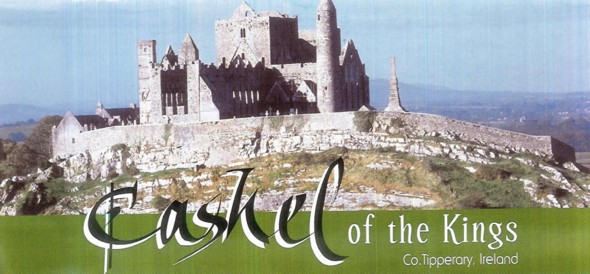
Ireland's international best selling fictional detective was celebrated in a weekend convention by her `hometown' - a rousing success proclaimed by all!
)
September 8-10, 2006 Cashel Palace Hotel, Cashel, Co Tipperary, Ireland CLICK HERE FOR SELECT EXCERPTS FROM LECTURERS' DISCUSSIONS
)
Introduction: A view from Peter Tremayne
One of the greatest and most memorable experiences in a writing career stretching back nearly forty years. That is my assessment of the Féile Fidelma 2006! And my wife, Dorothy, has summed it up as `a magical weekend'. We travelled to Cashel, a town we know so very well, on Thursday evening with my nephew, Paul. We arrived in some anticipation, as we had no idea how the Féile would turn out. Our old friend, Seamus King, met us and we went for a meal to discuss the weekend programme.
Over fifty people from ten countries had registered and some others had registered for certain parts of the weekend. And how wonderful it was to meet them all. It was like meeting old friends. One felt the warmth and friendliness and the common interests. It was good to meet Annie from Scotland who co-ordinated the Yahoo discussion group for a time. Alas, there seemed so little time to spend with each and everyone, so an apology to anyone that I was unable to spend as much time as they wanted.
Then there were the speakers, who were old friends, and the members of the organising committee.
Two people I must mention especially among those attending. Peter Elkington from British Columbia aged 83 years. He arrived in Shannon Airport, having booked a car, with valid Canadian and US licence, and was told that he was `too old' to hire the car. I find that outrageous and `age-ist'. Protests will be made. Peter had to hire a taxi to get him all the way from Shannon to Cashel, Co. Tipperary, as he did not want to miss anything. Check out the distance. That's dedication for you. Thanks, Peter, your presence made the events even brighter. Seamus took matter in hand and drove Peter back to Shannon to get his flight home. Seamus deserves a medal - we'll have to have an `Order of Sister F' for such devoted service! How about it, David? [Peter, consider it done! - David]
|
Sunday afternoon I went with Seamus [King] and about 25 of those remaining after the Féile Fidelma closed to The Rock. While we were there, one of the official guides - Jerry Coffey - came running round and grabbed me. Told me that a coach load of Americans had just arrived and knew nothing of the Féile but had started to ask questions about Fidelma. Jerry had seen me on the otherside of the Rock and raced round to get me. Amazing! 30 or 40 US tourists suddenly bursting out clapping when he returned with me - photographs, autographs and one little old lady giving me a hug. I could get swell-headed! Jerry said he often gets such tours come through. - Peter Tremayne |
The oldest attendee was 86 year old Brendan Walsh, a Kerryman, who travelled from Manchester, England, with his daughter. Again, it was a delight to speak with him.
Right from 10 a.m. on Friday, starting with an interview on Radio Cashel, I was `on the go'. From there to Seamus' house to help him, David Wooten, my nephew, Paul, organise the `welcome packs'. Then to lunch with a group of friends and fans, including David and others. Then off to Cashel Library to give a talk and reading to about thirty people. This was a separate event to the weekend for locals mainly but many visitors passing through Cashel attended, such as an Austrian couple, who had not realised the weekend was on and who came with German language Fidelma editions in search of locations. Questions came thick and fast and books were signed and photos taken.
Then I was on the move again to Olivia and PJ's Sister Fidelma Guesthouse to officially open it. Great fun meeting more old friends like Dean Philip Knowles of Cashel Cathedral and the former Mayor Tom Woods (who held a civic reception and presentation for me in the Council Chamber two years ago) and the current Mayor Paddy Downey. But there was no rest for the wicked, for we had to literally run to the Civic Offices where Mayor Downey gave a reception for the speakers and organising committee. Then it was a run back to Cashel Palace Hotel for the official opening of the weekend.
And then the Féile Fidelma started.
There is no need for me to give my take on those events. Someone added up that I had to make eight speeches over the course of the weekend, most of them `off-the-cuff ' so I apologise as to their quality. I thought I was only going to get away with my Friday night talk on Fidelma's World. Ah well, I hope I didn't bore you too much!
I have to say, like everyone else, I enjoyed and learnt a lot from all the speakers and I would specially like to thank Dr Dan McCarthy of Trinity College, Dublin, who had a bad accident, falling down a flight of stairs some days before and damaging his spine. He could, with good reason, easily have cancelled but it is a tribute to Dan's dedication that he determined to attend. Dan's wife drove him down to Cashel where he delivered his talk in obvious great comfort. You will all be pleased to hear that Dan is now on the road to recovery after sessions with a physio.
|
Then Monday lunchtime - Dorothy and I had just had coffee and a snack in The Bakehouse in the town (trying to avoid the residue of the weekend). We were just leaving. Dorothy behind me, passing a table, heard an American lady say: `We've missed Peter Tremayne by a day'. Dorothy called me back and said to her `this is Tremayne'. Jeezus! I now know what a pop star feels like. Told her and her husband (a Malone and herself a Flynn from just north of NYC) to finish their meal and come over the Cashel Palace where I would sign their books - they picked up some paperbacks from the Heritage Centre. They were just passing through for a day also looking for Fidelma connections and didn't know the event has taken place when they were told. Lucky the woman was lamenting aloud her misfortune at having, as she thought, missed me, and even luckier that Dorothy has sharp hearing! - Peter Tremayne |
My wife and I had arranged to stay on after the weekend and were delighted that we did so. The experiences on the Sunday afternoon, the unexpected arrival of a coach load of US tourists at The Rock looking for Fidelma sites, and the two US tourists in The Bakehouse, were wonderful experiences. Annie from Scotland's suggestion of a meal on the Sunday evening was an inspiration. It gave me more chance to talk with people. In fact, it was difficult to leave altogether.
Monday morning found me doing another interview with Cashel Radio about the weekend. And on Monday we checked with Nuala at Book Nook who was halfway between outrage and tears that her supplies of the latest novel A Prayer for the Damned had not turned up. They had not turned up by midday on the Tuesday, even though the Dutch and Argentines waited in the hope of taking away copies. Representations are being made to the publishers as some answers need to be made and apologies to all those who could to get books when all those attending had been assured they would be able to purchase. It will be no comfort to anyone for me to point out that, as I write on Friday a.m., my own author's copies have not arrived at my house either!
One American lady was so upset on Monday night that Seamus, a great man, indeed, actually went home and brought back his own copy and gave her so that she could go home with an autographed copy. Seamus and his wife Margaret entertained Dorothy and I and Paul to a great dinner on Monday at their house, a special, personal occasion, and on Tuesday Olivia, PJ, Petra and `Sheila' played hosts for a wonderful lunch at the Fidelma Guesthouse before we finally departed for Cork airport. I have to admit, I handed the car keys to Paul to drive - I was pleasantly exhausted both physically and mentally. It was a great experience.
As I mentioned at the Saturday dinner, Seamus, John and Emily and the entire Cashel Arts Festival, have done a fantastic job and all our thanks go on to them. Go raibh m"le maith agaibh - sl"inte mh"r agaibh - bhalla go balla.
A recap of events from Seamus King of the Cashel Arts Fest:
Féile Fidelma - Cashel, Ireland, September 8-10, 2006.
) The idea of a weekend devoted to the life and times of Sister Fidelma, the fictional nun-sleuth in the Fidelma Mysteries by Peter Tremayne, was
first mooted during a visit by the author to open the Cashel Arts Fest
in 2004. It seemed a good idea at the time and it has proved a winner since then.
The idea of a weekend devoted to the life and times of Sister Fidelma, the fictional nun-sleuth in the Fidelma Mysteries by Peter Tremayne, was
first mooted during a visit by the author to open the Cashel Arts Fest
in 2004. It seemed a good idea at the time and it has proved a winner since then.
The Cashel Arts Fest committee, who have been organising a festival devoted to the arts in Cashel in November for three years, were enthusiastic. They saw it as an extension of their brief, and they found an enthusiastic member of the committee, Seamus King, to undertake the work of organisation. A date, in the second week of September, was agreed as the most appropriate time to hold it.
) Finding a name for such an event caused some difficulty. No fewer than sixty
"summer schools" take place in Ireland during the year, most of
them devoted to historical, literary and musical figures. They are usually
held over the summer but the Sr. Fidelma weekend was outside the season, so a different name had to be found. Eventually
"Féile Fidelma" was decided, which means something
equivalent to "a festival devoted to Fidelma", even though it wasn't strictly a festival! But the name sounded well and the alliteration was important.
Finding a name for such an event caused some difficulty. No fewer than sixty
"summer schools" take place in Ireland during the year, most of
them devoted to historical, literary and musical figures. They are usually
held over the summer but the Sr. Fidelma weekend was outside the season, so a different name had to be found. Eventually
"Féile Fidelma" was decided, which means something
equivalent to "a festival devoted to Fidelma", even though it wasn't strictly a festival! But the name sounded well and the alliteration was important.
| Click here for an excellent blog of the weekend's events |
The author, Peter Tremayne, was enthusiastic about such an event from the beginning and set about getting a list of speakers together, who would add lustre to the event. He succeeded admirably. He, himself, gave the introductory talk on "Fidelma's World", and there could have been no better person to introduce proceedings. The Fidelma Mysteries are part of the genre of Science Fiction and Dr. John Scaggs of Mary Immaculate College, Limerick, Ireland was drafted in to speak of the impact of Sister Fidelma on Irish Crime Fiction. Dr. Andrew Breeze of the University of Navarra, Spain addressed the links between the cultures of the kingdoms of Ireland and Dyfed in Wales, as reflected in the Fidelma adventure, Smoke in the Wind. Dr. Dan McCarthy of Trinity College, Dublin, Ireland, an authority on the astronomy and chronology in the ancient Irish annals and chronicles, spoke about how closely the knowledge of the annals has been substantiated by modern scientific investigations. Professor Máirín Ni Dhonnchadha, of University Colleg, Galway, Ireland, spoke of a seventh-century love tale of Liadan and Cuirither, which parallels the story of Fidelma and Eadulf in the Mysteries. As the Mysteries have been translated into thirteen languages it was only appropriate to hear from someone in the area of translation, and Hans van den Boom, the Dutch translator and publisher was invited to speak of the problems. Finally, the person who has done more than any to publicise the Fidelma Mysteries, and who runs the Fidelma Website, as well as being Director of the International Fidelma Society and editor of its magazine, The Brehon, spoke about the role of the Society and where it was going.
The task of getting people to register for the weekend commenced and it was helped immensely by David Wooten's efforts on the website. Intending participants were able to register online and in the course of time about fifty did so. Anyone who registered before May 1 received a ten percent discount. The target number was fifty, with the hope that the figure might be exceeded. They came from ten different countries, Argentina, Brazil, Canada, England, Germany, Ireland, Netherlands, Scotland, Spain, U.S.
)
|
)
|
)
|
September 8 was awaited with a certain amount of trepidation on the part of the organisers, that everything would go according to plan. The first official function of the weekend was reading from his work and answering questions at Cashel Library by Peter Tremayne. An enthusiastic audience had so many questions and requests for signatures and photographs that the event ran over time.
It was then straight to Bruden Fidelma for its official opening by the author. P. J. and Olivia Quinlan have been running Cashel Town Bed and Breakfast in John Street for some time and decided to create a themed hostelry after the characters in the Fidelma Mysteries. They got the fullest support from the author and outstanding help from local artist, Neil Ryan, in transforming the rooms with names from the novels and quotations from the Brehon Laws. Peter cut the ribbon to represent the re-naming of the place before an enthusiastic bunch of neighbours and friends, plus a number of the participants in the weekend. While doing so he quoted from some rules and regulations in the Brehon Laws relating to the duties and obligations of hosts and guests in hostelries.
)
) A busy evening so far, it was to get busier. Peter and others had to leave the reception that followed the re-naming to get back to the Civic Offices of Cashel Town Council. Here, Mayor Paddy Downey, formally welcomed Peter Tremayne, members of Cashel Arts Fest, and others associated with Féile Fidelma, giving official recognition to the weekend.
A busy evening so far, it was to get busier. Peter and others had to leave the reception that followed the re-naming to get back to the Civic Offices of Cashel Town Council. Here, Mayor Paddy Downey, formally welcomed Peter Tremayne, members of Cashel Arts Fest, and others associated with Féile Fidelma, giving official recognition to the weekend.
The Cashel Palace Hotel was the headquarters of the weekend and it was here that the official opening took place. Most of the participants had registered by this stage and they collected for the reception and formal opening, together with local dignitaries and politicians. Mayor Paddy Downey welcomed everyone, thanked the organisers for their preparations and wished the weekend every success.
)
|
)
|
)
|
)
|
The first talk, by Peter Tremayne on Fidelma's World followed. It was chaired by John Murray, chairman of Cashel Arts Fest, and was followed by a question and answer session. When it was over there was time to relax and many adjourned to the bar for the type of refreshment that follow such events in Ireland.
Everyone was ready at 9.30 on Saturday morning for the first of three lectures, chaired by Seamus King, and they all engendered lively contributions from the floor afterwards.
The afternoon was given over to a coach trip to places associated with the Fidelma Mysteries. This took the participants through Tipperary and on to Emly, Knocklong, the Glen of Aherlow and back to Cashel via Knockgraffon. One of the highlights was a group photograph in the place in Emly graveyard where the monastery that features in the novels once stood. Liam O Duibhir, a local historian gave the commentary.
|
|
)
|
)
|
)
|
)
|
) It was back then to the Cashel Palace Hotel for the formal dinner. This was a most enjoyable event and the enjoyment was reflected
in the way the decibel level of the conversation rose at the meal progressed. Peter Tremayne added to the enjoyment with an entertaining after dinner speech. There was a late night for some afterwards in the bar.
It was back then to the Cashel Palace Hotel for the formal dinner. This was a most enjoyable event and the enjoyment was reflected
in the way the decibel level of the conversation rose at the meal progressed. Peter Tremayne added to the enjoyment with an entertaining after dinner speech. There was a late night for some afterwards in the bar.
) Participants were given a little leeway the following morning with the first of three talks, chaired by Emily Kirwan, not commencing until 10
am. During the morning there was a break to take a group photograph in the
front of the hotel. This will be mailed to each of the participants. In the afternoon many of those who were still around got a tour of the Rock of Cashel.
Participants were given a little leeway the following morning with the first of three talks, chaired by Emily Kirwan, not commencing until 10
am. During the morning there was a break to take a group photograph in the
front of the hotel. This will be mailed to each of the participants. In the afternoon many of those who were still around got a tour of the Rock of Cashel.
)
There was a reluctance among the participants about bringing a most enjoyable weekend to an end so there was another get-together for dinner at Legends restaurant that night. But, all good things do come to an end and departures that had begun on Sunday afternoon continued apace from early on Monday morning. Only a few were still around to depart on Tuesday.
It's too early yet to comprehend everything relating to the weekend. However, initial reactions are very positive. The variety of participants from so many countries added to the international flavour of the event and reflected the worldwide appeal of "Fidelmania."
The quality of the lectures was of such a high standard that nobody could have been displeased with the weekend. The accessibility and affability of the author made a huge impact on the participants. The smallness of the town of Cashel gave an intimacy and cohesion to the event that made it special. In fact the question of a second weekend, or an annual event devoted to the Fidelma Mysteries, was discussed. The consensus appeared to be that there must be another one at some time in the future, and that Cashel is the only place to hold it, Fidelma's "hometown".
Finally, Féile Fidelma produced one important memento. David Wooten, who did such outstanding work in publicising the weekend, produced a thirty-two page booklet that all the participants received in their packs. A souvenir programme, it will remain a treasured possession of the weekend long after the memories have faded.
Speakers
Fidelma's World
PETER TREMAYNE'S OPENING TALK AT THE
FÉILE FIDELMA, CASHEL PALACE
Friday, September 8, 2006
)
After the formal opening of the Féile Fidelma 2006! by the Mayor of Cashel, Cllr. Paddy Downey, with short addresses by the chairman of the Cashel Arts Festival Committee, John Murray, the vice-chairman of South Tipperary County Council, Cllr. John Fahey, and Peter Tremayne himself, the main business of the weekend began in the Long Room of Cashel Palace.
John Murray, who chaired the talk, introduced Peter Tremayne.
Giving his personal welcome to all those attending, Peter commented that he little dreamt thirteen years ago, when he wrote the first Fidelma short story, that his creation would command such an international following or that there would be such a gathering in Caiseal na R" - Cashel of the Kings.
Setting out in a light hearted fashion, he told the audience that, contrary to his custom, he was not going to give a lengthy talk - he added, or at least not much of one.
`You will be hearing some very erudite people over the next few days so I feel a wee bit like John the Baptist - some are coming whose shoe laces I am unfit to latch. What I am going to do is give an introduction and, if you are a really bad audience, I'll read to you part of the latest book - A Prayer for the Damned [ed. which had been published the day before], `then you can put questions to me. Let's have a dialogue instead of me standing here and giving you a monologue.'
Peter went on to say that reading a book was a very subjective activity. Each one of us has our own imagination, our own perceptions and interpretations. It's a wee bit like watching an interesting incident on a street corner. If seen by half a dozen people, when asked what happened, they come out with half a dozen different accounts.
`I am aware that in this illustrious gathering most of you probably know more about Fidelma's histrionics than I do. Writers can be liable to forget what they have written about their characters. Conan Doyle, in his Sherlock Holmes stories, forgot Watson had been wounded in the left arm in the Study in Scarlet and transferred the wound to his leg in The Sign of Four. If I can't remember specific incidents in the 15 novels and 32 short stories, I plead a literary precedence. I know you all have your own interests and views. So I want to hear your questions about Fidelma and her world and I will do my best - hopefully - to supply answers.
`Over the next two days you'll be hearing some leading academics talking about Fidelma's period of Irish history. I would like to stress from the outset that I make no other pretensions for the Sister Fidelma stories other than that they are written as fiction - as entertainment, as mystery thrillers - although, admittedly, set in an unusual historical time and cultural background. But if they are not enjoyed as entertainment, if readers cannot relax and get carried along with the stories and accept the background, then I would have failed in what I have set out to achieve.
`Now, having said, I do accept that for some it is the unusual historical and cultural background that causes a great deal of interest. A learned critic, early on, pronounced that it was the historical background that was my MacGuffin. Many of you may know what a MacGuffin is. It was an expression coined by screenwriter Angus MacPhail, often wrongly attributed to his friend Alfred Hitchcock. I think the critic used it in a slightly wrong context as it really means the device that gets the story going, after which the writer can carry on addressing the plot, characterisation and universality of motivations. However, I could understand what the critic was attempting to point out. That in crime writing, as in any story telling form, there are but limited plots and motivations and he viewed the MacGuffin as that which sets the story apart - the background setting or the type of hero or anti-hero. In others words, he felt it was not what you say but the way you tell it.
`So, in choosing a female sleuth living in 7th Century Ireland, one who was not only a religieuse but qualified in the law system of the time, had I found my MacGuffin? To be truthful, I am happy to leave that question to others more capable of such literary analysis such as Dr John Scaggs who you will hear tomorrow morning.
`I know many readers are very intrigued with the background and perhaps many of you will have read the `frequently asked questions' pages of Dave Wooten's amazing Fidelma website. You will have seen that I have often had to write long essays to answer questions that range over many of background topics that arise form the stories.
`From the responses and reactions I have heard it seems that one of the results of the Fidelma books has been to bring 7th Century Ireland out of the university lecture rooms and into a growing awareness among the fiction reading public. It has been flattering to hear from friends in Celtic Studies departments that several of their students tell them that they were inspired to take up those studies by reading my books. You may have read in the David Wooten's magazine The Brehon that one California lawyer was inspired by Fidelma to go to Cork University College to take a master's degree specialising in Brehon Law. It's flattering but a heavy responsibility!
`A large part of the correspondence from readers across the world express their surprise that Ireland had such a social system at this time. Some, however, express open scepticism.
`Years ago I was giving a talk in St Hilda's College, Oxford University, when a member of the audience accused the Fidelma books of displaying `an anachronism of attitude'. I did have to think what that meant for a moment. I found that I was accused of putting modern attitudes - such as the feminist approach which has been read into the stories - into 7th Century Ireland where such attitudes, so my accuser assured me, could not possibly belong. So I had to abandoned my set text on historical murder mysteries, and give a lecture on the 7th Century Irish social system and Brehon Law that is pivotal to the Fidelma books.
`Now I do accept that this scepticism is not the fault of the readers. They are coming to Fidelma with the general perception of the so-called Dark Ages. It was thought to be a time without law, of slaughter, rape, pillage and anarchy. And the general understanding of religious institutions of the time is based on the image of the strict rules and celibacy of the late medieval Roman Church. Few people knew anything about this early period of Irish history and, certainly outside of Ireland, generally people have distorted ideas about the country, its history and culture in general. This is, frankly, due to Ireland's colonial experience with its big neighbour. It would be natural therefore for some to express their doubts whether I was simply making it all up.
`Well, that was the burden I had laid on myself as a writer. But then I had not consciously set out to write an international best-selling murder mystery series. Had I done so, with all due respect to the land of my fathers, would I have chosen 7th Century Ireland and restricted myself to containing the stories within the strict parameters of the ancient Irish law system? It would surely have been much easier to choose another historical period and another country, which the general readership was more familiar. But, as the short stories turned into novels and novels into a series, I was faced with the problem that I was writing about a time period that few people knew about, about a culture that was unknown to most people and about a law system that was not usually discussed outside of Celtic Studies departments of universities. How could I communicate this to a general readership of murder mystery stories? Even Umberto Ecco, in Name of the Rose, with his medieval Italian setting, had an easier task. On the surface medieval Italy was more accessible to general readers than 7th Century Ireland.
`I had to rely on my own enthusiasm for 7th Century Ireland, which I have always been fascinated by - both in time and place. Irish society at that time was in a state of great flux and change. And the tensions were just right as a background to present the mysteries Fidelma has to solve. The plots were often inspired directly from the ancient records themselves, the annals and chronicles or from references in Brehon Law judgments. Where possible, I have always tried to get back to original sources or as close to original sources as possible.'
Peter mentioned the importance of original sources and told the audience a joke about how monks could make an error in copying the ancient manuscripts that brought laughter and applause.
He went on to say that 7th Century Ireland had only comparatively recently converted to Christianity and there were pockets of people who obviously still adhered to the old faith. Even with Christianity, the Irish had remoulded it with their own cultural attitudes.
`Today we speak of a Celtic Church, although there was no such centralised entity, just a collection of distinct cultural attitudes - the churches still looked to Rome as a centre but without conforming with Rome's rules. At the same time, there were some Irish clerics who believed that a complete absorption with Rome should take place, that the churches should accept Roman rules. There were conflicts between the native law system - the Law of the F"nechus or land tillers which today we call Brehon Law after the Irish word for a judge breitheamh, and the harsher Roman inspired Penitentials. And there were those ascetically minded who wanted to enforce celibacy on all religious as well as those who did not.
`During this weekend Professor Máirín Ní Dhonnchadha will be talking about one tragic story from this period - one of my favourite early Irish love stories - it is a tale from Fidelma's period the 7th Century, which survives in a 10th Century manuscript - and is about a female and male religious who fall in love but unlike Fidelma and Eadulf, fall foul of St Cum"n Fada of Clonfert who did believe in celibacy.
`The 7th Century was a period when Ireland was also the great centre of European learning. It is often called Ireland's `Golden Age'. It was a time when students from all over Europe flocked to Ireland for an education. At Durrow - the name means Plain of the Oaks - founded by St Columba about AD 563 - we have a record that students from no less than 18 different countries were attending studies there in Fidelma's day. It was there that the famous Book of Durrow was compiled, one of the great highly ornamented Gospel books. You'll be hearing from Dr McCarthy from Trinity College, Dublin, tomorrow speaking about how the great ecclesiastical and secular colleges were advanced astronomical observatories during this time. Having read Dan's papers, it is truly astonishing how accurate their celestial observations. They were astronomers and astrologers.
`And, of course, during the 7th Century there were jealousies and tensions between clans and ruling families as well as the normal between human beings in all ages, love, hate and jealousy. The conflict between the Uí Fidgente and Eóghanacht really did exist. The historical background events in the stories is in accordance with details given in surviving Annals and Chronicles, and the characters, where possible, are historical characters of time. Fidelma's father Failbe Flann and her brother Colg" really did exists as kings here at Cashel.
`What has amazed me is, that in spite of the task of portraying what is to our modern perceptions an alien culture and its values, the Fidelma books have achieved a resonance in many countries. They are now appearing in 13 languages, the Russians have recently joined the Fidelma family; they've been broadcast as radio plays in Germany, optioned for developing as a television series, which we hope may come to fruition. Having been concerned in trying to interpret this ancient world to English language readers, I am particularly looking forward to hearing my Dutch publisher and translator, Hans van den Boom, talking about the problems of translating Fidelma into other languages.
`But, to return to what I said at the opening, for the general readership, the narrative is, or should be, self-explanatory and the history and the cultural elements should not get in the way of the stories. The stories are, as I have said, primarily written for entertainment, as mystery thrillers, and I hope, judging by their continued and growing international popularity, readers of the books, such as yourselves, agree that this has been achieved. You might however disagree and I am anxious to hear your views and questions. I should add that at the end of the Féile, Dave Wooten, the director of the International Sister Fidelma Society, will be discussing with you, after five years of the Society's existence, what you want from it and how he can improve the services it renders. And to paraphrase the words of John F. Kennedy, I believe he may be asking you to also think not what the Society can do for you but what you can do for the Society.'
Continuing in an amusing tone Peter then said that in spite of the audience being impeccably behaved, he would inflict on them a reading from the latest book A Prayer for the Damned, which had been published on the day before.
`As I often explain, the ideal way to hear a reading of the stories is in a resonant Munster accent that I only possess in my imagination. Being the son of a Corkman born in Coventry, Warwickshire, and educated in Sussex, I'm afraid you'll have to bear with me. I should also warn you that I am no professional reader.'
Peter then read the Prologue from the new novel, which was extremely well received, and the floor was then opened to questions which, as was expected, were many and finally the chairman had to reluctantly bring the session to an end.
DR JOHN SCAGGS OF MARY IMMACULATE COLLEGE, LIMERICK UNIVERSITY
Dr Scaggs was introduced as the first speaker of the Saturday session by Seamus J. King, who chaired the talk.
The Impact of Sister Fidelma on Irish Crime Fiction
INTRODUCTION
There are two questions that need to be asked from the outset. The first, "Who is Sister Fidelma?", in the present company requires no answer. The second, "What is Irish Crime Fiction?", is the one that demands a little more attention at this point, and I want to briefly consider what seem to me to be the three main reasons for identifying something as an example of "Irish Crime Fiction". It is only be considering what we mean by the term that we can really understand the impact that Sister Fidelma has had.
) 1) Crime fiction written by Irish writers, or writers of Irish descent
1) Crime fiction written by Irish writers, or writers of Irish descent
In this particular category, it seems to me that Peter is in good company, coming as he does from Irish stock. Edgar Allan Poe, generally recognised as the "grandfather" of the mystery story, also had Irish roots. The Poes were, according to Peter Haining in his introduction to Great Irish Detective Stories (Pan Books, 1994), tenant farmers in Co. Cavan until John Poe, Edgar Allan's grandfather, emigrated to the New World in 1750. Poe himself, however, never visited Ireland. Some of you may have noticed the significance of Haining's book, Great Irish Detective Stories. This collection of short stories includes one of the first Sister Fidelma stories, "Murder in Repose" (1993).
Wilkie Collins, author of The Moonstone (1868), which none other than T.S. Eliot described as "the first, the longest, and the best of modern English detective novels", also had Irish roots. There are aspects of the sensation novel, of which The Moonstone is an example, which are evident also in the Sister Fidelma novels.
Sir Arthur Conan Doyle, creator of Sherlock Holmes, was born in Scotland of Irish parents - Mary Foley, and political cartoonist John Doyle. Doyle, as most of you will by now be well aware, is a good Irish name. Not only that, but in the Holmes canon, the great detective is said to have visited Ireland several times on cases, and certainly Dublin, Belfast, Waterford, Maynooth, and (strangely) Skibbereen, are mentioned in this regard.
I mention these writers not just to indicate that Peter, whose family hails from Cork, is in good company (as if it weren't enough of a blessing to have Irish roots in the first place!). No, I mention these three writers because there is, in Peter's Fidelma novels, a re-engagement with the themes, techniques, and devices of these writers that forms an important part of contemporary crime fiction. This is something that I will return to later in this talk.
There are other writers with Irish roots, of course, some more contemporary than Poe or Doyle. Raymond Chandler's mother, for example, was Irish, and Chandler's letters reveal that he was proud of his Irish ancestry - and why wouldn't he be? More recently there is Dublin-born Ruth Dudley Edwards, whose crime novels are in the tradition of the great Golden Age writers like Dorothy Sayers, Margery Allingham, and Ngaio Marsh. Again, the writers of the Golden Age are invoked here because the Fidelma novels, as I will outline shortly, revisit the themes, techniques and devices of the classic whodunit, albeit by reinventing them and relocating them in seventh-century Ireland.
However important the "Irishness" of the crime writer might be in identifying what exactly constitutes "Irish Crime Fiction", there are still two more reasons that a novel or a story might be characterised as such, and the first of these is how prominently Irish characters feature in the story - and, by extension, how prominently Irish history, culture, politics, and so on, feature.
2) Crime fiction featuring Irish characters, history, politics, and culture
There is a sense in which novels featuring Irish characters, history, culture, politics, and so on, can be considered Irish crime fiction, but it's difficult to know where to draw the line. Certainly, without these elements it's difficult to identify something as "Irish" crime fiction, but even with these elements in place it can be difficult. Peter Lovesey's Invitation to a Dynamite Party (1974), the plot of which revolves around the attempts of a group of Fenians to use a bomb to assassinate the Prince of Wales in 1884, while it features Irish characters and turns on the political question of Home Rule, could hardly be described as "Irish Crime Fiction". A novel, like Les Roberts" The Irish Sports Page, set in Cleveland and featuring a Slovenian PI, but whose plot focuses around the Irish Community in Cleveland, would similarly be difficult to describe as an example of Irish crime fiction.
Of course, neither Lovesey nor Roberts has Irish roots, so perhaps it is a combination of the three points mentioned before, rather than the presence of merely one or two of them, that can help us to define what it is about Irish crime fiction that makes it Irish crime fiction. In which case, the third situation, that the novel or story be set in Ireland, is clearly significant to our understanding of Irish crime fiction.
3) Crime fiction set in Ireland
What is interesting here, in relation to the Fidelma novels, is that the novels are not always set in Ireland. In fact, it is not until the third novel in the series, Suffer Little Children (1995) that we are treated to the first novel to be entirely set in Ireland, and it is not until the fourth novel in the series, The Subtle Serpent (1996), that the Fidelma/Eadulf partnership is featured in an Irish setting. The first novel in the series, Absolution by Murder (1994), is set at the Synod of Whitby in what is now England, while Shroud for the Archbishop (1995) is set in Rome. Despite this fact, few would disagree with the identification of these, and all of the Fidelma novels, as Irish crime fiction. So clearly the requirement of the story being set in Ireland is not set in stone. Again, this reinforces the point that we tend to identify Irish crime fiction not by one element alone, but by the relationship between the three elements outlined above.
It is at this point that we can begin to understand the central importance of the contribution to Irish crime fiction that Peter's Fidelma novels have made, and it is this: It is only in the last ten or twelve years that a recognisable body of Irish crime fiction began to develop, and the Sister Fidelma stories were in the vanguard of this development. Absolution by Murder in 1994, Shroud for the Archbishop in 1995, and so on. A quick survey of what little critical commentary there is on the field reveals that the overall consensus is that Irish crime fiction, until recent years, has been very thin on the ground, and that even now there is far less, per capita, then in the United States, Britain, or elsewhere in Europe.
Bob Flynn, writing about Ken Bruen's first Jack Taylor novel The Guards (which is set in Galway), says that it has "few, if any antecedents", and describes it as "one of the curiously rare Irish crime novels" (The Guardian, Saturday June 9th, 2001). Flynn was writing his review of Bruen's novel in 2001 - not so long ago, although crucially, in terms of highlighting the importance of the Sister Fidelma series, seven years after the publication of Absolution by Murder. Gerry McCarthy, writing three years later in The Sunday Times in a review of Cormac Millar's An Irish Solution (2004) points out that crime fiction "has been undergoing a boom in Ireland", and I think it is important to note that far from being merely a part of this boom, the Fidelma novels were one of the contributing factors that set it in motion.
There is another key point to make here. The two novels by Bruen and Millar mentioned above, frequently cited as key texts in the developing field of Irish crime fiction, are both contemporary novels. They are novels which are set in, and reflect on, an Ireland characterised by increasing affluence, a fast-growing multi-cultural population, rapidly expanding urban centres, and increasing levels of violent crime. When James Joyce wrote, in "The Hanging of Myles Joyce", that there is less crime in Ireland than in any other country in Europe, his observation was far from prophetic. Importantly, the Fidelma novels offer an insight into an Ireland before the arrival of the Celtic Tiger, even before the destructive forces of foreign occupation, political upheaval, and civil war. Interestingly, though, the world that the novels depict is not so different in many ways to the Ireland of today. There is a simple reason for these similarities. As Gerry McCarthy points out, in his review of Millar's novel, crime fiction tends to flourish "in a society with a pervasive aura of corruption, where nobody can be trusted". Speaking of the Ireland of today, he identifies how the country "is steeped in chicanery and broken promises", and how it offers "an ideal backdrop for genre fiction".
The importance of the Fidelma novels, then, is that they reflect both on Ireland's past, and on her not-so-different present. Significantly, as the Fidelma novels make clear, particularly in the way that their plots crucially depends on events, hidden or otherwise, in the past, Ireland's present is a child of its past. In this way, despite the fact that they are historical novels, the Fidelma stories are also a part of Ireland's Celtic Tiger present (political double-dealing, civil war, and even hunger strikes are also alluded to, or form the focus of the plot, in most of the Fidelma novels).
The Fidelma novels contribute to the growth of Irish crime fiction in other ways too. In general, as Bruen's Jack Taylor novels make clear, hard-boiled detective fiction, normally identified as a distinctly American genre, is popular with Irish crime writers. This has something to do with the identification that the Irish feel with rule-breaking, anti-authoritarian, individualistic, and often heavy-drinking hard-boiled Private Eye heroes in the mould of Raymond Chandler's Philip Marlowe, Dashiell Hammett's Sam Spade or Continental Op, and Robert Parker's Spenser. It also has something to do, I think, with the Irish abhorrence of the spy and the informer - something instilled in the Irish mindset by what Bruen describes as a tortuous history of betrayal. Significantly, the figure of the amateur detective, as he or she appears in the Golden Age fiction between the two world wars, has much in common with the figure of the spy and the informer.
What the Fidelma series has done is to reinvent the figure of the analytic detective for the contemporary reading audience, by reinventing her in the figure of Sister Fidelma. As a dálaigh, or lawyer of the Brehon system, she represents the forces of law and order, but she is no slave to the ruling elite. On the contrary, she is presented as fiery, independent-minded, and not easily swayed by the consensus, and her appearance reinforces this, with "rebellious" strands of red hair which frequently escape from the confines of her headdress (Absolution by Murder, p.2, Shroud for the Archbishop, p.9, and so on). Her rebellious nature is attractive to a people who pride themselves on that same quality.
This is important, because what it allows the Fidelma novels to do is to re-engage with a tradition of crime writing which, for various reasons, has been long overlooked by Irish writers - the Golden Age whodunit. The whodunit, of course, drew on an even older tradition of crime fiction established by Edgar Allan Poe, and taken up some fifty years later by Sir Arthur Conan Doyle. I did mention earlier that I would return to these two writers, but for those of you reading this talk online, you will have to refer to my earlier article in The Brehon for more details on Peter's appropriation of the techniques and devices of the whodunit, and his reinvention of them in a seventh-century Irish setting.
DR DAN MCCARTHY OF TRINITY COLLEGE, DUBLIN
)
Seamus J. King introduced and chaired Dr Dan McCarthy's talk on `Astronomy in the Colleges of 7th Century Ireland'.
Dan began his talk by quoting from the first Sister Fidelma mystery Absolution By Murder (1994) from an event described on page 56-7 of a total eclipse at the Synod of Whitby and the different reactions by the Saxon and Irish delegates. He asked the audience, was Peter right in describing the event and such reactions. Could Sister Fidelma and the Irish delegation to the Synod really have known what the phenomenon was and the Saxons did not?
Even after the event, the Venerable Bede was inaccurate with his date and timing of it.
Dan, as the expert on the subject of astronomy in the Irish ecclesiastical and secular colleges of the period, went on to show how he had studied the ancient Irish annals and chronicles of the period. He had put times and dates on a computer to assess their accuracy. The lists of astronomical sightings, of bright stars, comets, eclipses and so on, recorded in the annals and chronicles were as accurate as they were advanced. The records of Irish astronomical observations in the Irish annals extend from AD 594 to AD 1133.
The Irish annals preserve during this period a total of thirty-six astronomical records of observations of solar and lunar eclipses, comets, aurorae, volcanic eruptions and a supernova in the Crab Nebula.
These records imply the continuous existence in the Irish monasteries for over five hundred years of well-trained astronomical observers in observing and interpreting sky phenomena.
In paying tribute to the scholastic research shown in Peter Tremayne's background to the Fidelma Mysteries, Dan assured the audience that they might safely assumed, therefore, that as an educated member of the 7th Century Irish monastic community, Sister Fidelma did, indeed, possess a comprehensive knowledge of astronomy.
PROFESSOR MÁIRÁN NÍ DHONNCHADHA, NATIONAL UNIVERSITY OF IRELAND, GALWAY
Emily Kirwan, secretary of the Cashel Arts Fest and a former student of Professor Ní Dhonnchadha, introduced the speaker bilingually in Irish and in English.
Professor Ní Dhonnchadha's talk was on a love story from the 7th Century that has survived in a 9th Century manuscript - Comrac Liadaine ocus Chuirithir. It was the story of L"adain, a female poet, and of Cuirithir, a male poet and warrior, who both become religious and fall under the rule of Cuimine Fota, the abbot of Clonfert, who believed in celibacy.
The audience were enthralled with Máirán's presentation as she recited from her own new translation of the poem and showed her interpretation of the symbolism of the phrases from Old Irish and intent of the story. Unfortunately for us, Máirín is still polishing her work prior to its academic publication and we cannot publish her text but many will look forward to it when it does become available.
This ancient love story really anticipates the better known doomed love of Héloise and Abélard, from the neighbouring Celts of Brittany that dates from the 12th Century.
It is fascinating that Peter, in his current book, A Prayer for the Damned, admits to using the theme of the doomed love of L"adain and Cuirithir as part of the background to his story, although not exactly the central theme. Peter comments that Máirán's interpretations have brought the story into a better understanding for him, showing the conflict in L"adin's mind, the story from a female perspective whereas previous accounts by Kuno Meyer (1902) and Gerard Murphy (1962), more or less, dismissed L"adin's motivations as being, in modern parlance, `a tease'. It was good to hear such a refreshing approach.
HANS VAN DEN BOOM. OF DE LEESKAMER
)
Introduced by Emily Kirwan, who chaired his talk, Hans is not only the publisher of the Dutch editions of the Fidelma books but also prefers to translate them himself.
On audience reaction, Hans delivered what was certainly the most amusing talk of the weekend and kept the audiences in fits of laughter, although there was much to be taken seriously from it. Some of the problems of finding equivalent concepts that would be understood by the audience in the translated language had, perhaps, not occurred to many people. Indeed, we set off, thanks to Hans' slides, to what was translated from Japanese as the `Grammar Crisis Room'.
But even the hilarious signs had a serious intent. Being advised to `Please refrain from barking to avoid nuisance to neighbours' was, indeed, fairly understandable. But it was a little bit perturbing to come from the `Bureaucracy Centre' and arrive at the `Civilised Airport' to find your way barred by a sign announcing `Execution in progress'! You could always slip into the `Retarded flights restaurant'. Perhaps you might choose a dish of `Fatty cow in the United States in dad in sand'?
Well, there is always the bin marked for `Poison and Evil Rubbish'.
However the search for a toilet might be a problem as the sign read: `The second floor is under preparation now. Please be afraid, and although it is needed, use the seat for audience of the first floor, use the toilet of the second floor.'
Confused? Well, there is also the sign advising: `If you would like to join us, rubbish will never be homeless.'
If you thought it was hopeless you could always present yourself at the `Help yourself terminating machine'. And if that didn't work, don't worry. Take a chair and table but remember the sign: `Please keep chair on position and keep table clean after dying. Thanks for your co-operation.'
|
|
The ability to translate concepts from one language into another, however, is serious work and the problems of avoiding anachronisms is also problematical in dealing with historical works. Writing in English, Peter Tremayne can avoid gender identification of his villain but how to do this in other languages where the feminine, masculine still exist with neuter forms? Even simple expressions such as `you' creates problems - is the person addressed a stranger, a friend, or an intimate? The word `you' changes in other languages. Is it the Dutch `u', `je' or ``jij'? And sometimes when one things words are the same there is a problem - the English `rooster' is not a chicken in Dutch but a toaster!
Hans left his audience with much to think about as well as one of the most hilarious experiences of the weekend. He also left the audience in the belief that the Fidelma books are in caring and capable hands with their Dutch translator and publisher.
Photos taken by Hans during his trip to Ireland may be seen HERE
DAVID ROBERT WOOTEN, DIRECTOR, INTERNATIONAL SISTER FIDELMA SOCIETY
)
Emily Kirwan, secretary of the Cashel Arts Fest, introduced David to thr group.
'I have known OF Peter Berresford Ellis for many years - mainly because I was a history major lo those many years ago in college. While my main field of study was Ancient Near Eastern history, I strayed during my graduate years into a broader spectrum of history, including medieval European literature. At the same time I was investing more and more effort tracing my genealogical roots, which by happy occurrence, and through no real effort on my part, proved that I was a fortunate descendant of individuals of this fair island.
'Years later, through our mutual membership in a now-defunct organization best left to the dust of memory, I became more aware of Peter's widely varied writing projects. Imagine my surprise to learn that the pre-eminent Celtic historian of our time was actually the pen behind recent incarnations of zombies, Dracula, a hound of Frankenstein, and more. Surely this was a different fellow - not the keen intellect behind the incredible wealth of Irish history on which I was weaned. But, a bit further studied showed that, not only was he a well-respected Irish historian, but a prolific author of fiction as well. For those who aren't aware of Peter's extensive output, I would recommend a review of our website for complete details.
'In 2000 I worked up the courage to ask the permission (and cooperation) of Peter to set up a website devoted to the Sister Fidelma Mysteries. Now, let me say right from the beginning - I am NOT an avid fiction reader. I simply can't sit still through even the best of books. I am much more likely to be found PRODUCING than reading - though I am in no way a writer. My productivity falls in the realm of graphics - artwork for websites, creation and redesign of websites, production of marketing material for various clients, and the like. My other primary love is heraldry - something which piqued my interest while doing my aforementioned genealogical research, and a science and art form which has held my attention for over 3 decades, leading me to my current position as Executive Director of The American College of Heraldry.
'So, if I am not an avid reader of fiction - though I can devour nonfiction - why would I have an interest in promoting some obscure 7th century nun and her author? Simply put - the Sister Fidelma mysteries held my attention like no other fiction I had come across before. While I don't live, breathe, eat and sleep the series - I don't wish to shock, but must be honest with you - I do appreciate the mix of the historical setting with stories that keep the mind enthralled and eager to watch the stories develop to their conclusion.
'So, back to the website, for which I asked permission to develop. Originally it was intended merely as a reference site to "catalog" the works of Peter Berresford Ellis (and Peter Tremayne - I guess I HAD to include him). Within a few months of it being posted, an overwhelming number of people contacted the website to ask if some association or society for enthusiasts of the series could be formed. Hadnt thought of something like that - I was, and am, already involved in numerous other societies and organizations, usually handling the creation and/or editing of their publications, creating and maintaining their websites, etc. - but it didnt originally occur to me to develop any sort of Society. After all, I was not a rabid reader of Peter's fiction - but that's where the bulk of the inquiries were coming from.
'So, again, I pestered Peter, who, though I was certain was becoming annoyed with this upstart American constantly badgering him, was delighted to become the official patron of such a Society.
'Thus, in January, 2001, The International Sister Fidelma Society was launched. The website was expanded to include a great deal more information on Peter, and his books, focusing primarily on Fidelma.
'Almost immediately a modest print magazine, The Brehon, was launched and distributed to everyone in our small but die-hard circle of members throughout the world as part of their subscription. The magazine has appeared regularly ever since and we have attracted quite a number of distinguished contributors, from authors and anthology editors such as Peter Haining and Mike Ashley, to academics such as Professor Ed O'Rielly, Dr Michelle Klingfus, and Dr John Scaggs (who is graciously contributing his time to be here with us here this weekend). Likewise, we have published article from US attorney Wallace Johnson, as well as our highly prized regular contributor, Maurice McCann, a founder member, who is also an author.
'Peter himself has allowed us to publish some of his articles, and even given us rights on the first publication of two Fidelma short stories as a tribute to his fans - hopefully only the beginning of such a trend (hint hint).
'It has been truly amazing to see the diversity of people who are united in their admiration of the books. The membership roster for the Society justifies the "International" part of our moniker - with members from the United States, Ireland, Great Britain, the Netherlands, Germany, Australia, Japan, South Africa, France, Canada, Brazil, Austria and Scotland. And those are strictly fans of Peter's one series of fiction works - we should also remember that he is widely admired for his scholastic non-fiction books written under his real name of Peter Berresford Ellis.
The praise that critics have showered on the Fidelma Mysteries continues to pour in. One recent critical review from G.V. Whelan (also known as the novelist O.R. Melling), writing in Books Ireland about The Leper's Bell and Whispers of the Dead, stated:
What a concept! A seventh century Irish Nancy Drew in the guise of a young female cleric who is a trained legal advocate in ancient Irish law ... Fidelma is an original and complex character; brilliant, analytical, emotionally withdrawn, touchy and testy, and conflicted over her relationship with the Irish-trained Saxon, Brother Eadulf. As with the other books in the series, this is a good read, well-paced and suspenseful, sprinkled with Old Irish terms and fascinating detail of early Irish life, food, habits, dress et cetera. I confess to being a fan of the intrepid Sister and this collection of fifteen short stories provides an excellent opportunity for any reader to discover if he or she, too, will succumb to Fidelmania. I'm not surprised there's talk of a television series. An Irish heroine for both the seventh and twenty-first centuries, here is a character more credible and captivating than Xena the Warrior Princess!'
'In fact, Signet Books of New York recently summed up the general consensus of the reviews as being nothing less than "stellar."
'As "Fidelmania" continues to grow, we continue to build new members across the world. Since the Society was launched, one of our long-term intentions was to hold an international gathering of enthusiasts of the Sister Fidelma stories. Yet it was the Cashel Arts Fest committee here, in Fidelma's "hometown," which had the inspiration that this was the natural venue of such a gathering. We, in the Society, have been delighted to fully support it and to use all our best efforts to help make it happen. And we hope this may be the first of many such gatherings.
'2006 marks the Society's fifth vibrant year, and the membership shows no sign of flagging. I know that many of you attending here today are members of our Society, and I wish to thank you for your continued support. Many of you are not yet members, and I would like to take this opportunity to encourage you to join. I would also ask the favor of spreading the word about our organization - invite fellow readers to visit our website to discover the wealth of information available therein, and to consider becoming members as well.
'What does the future hold for the Society? Ideally, our ranks will swell to overflowing, and we will require a much larger venue for future gatherings - though I would like to acknowledge once again the great work that the Cashel Arts Fest folks have done to pull this all together for this year's events. As to our humble publication, The Brehon, you will have noticed we have upgraded to a color cover, usually highlighting one of the latest editions, domestic or international, on the reverse. We may ultimately convert this to an all-color publication - again, if the ranks swell enough to merit the cost. And, hopefully, we will have additional content to merit an expanded issue from time to time.
We will also look to expand the Society itself - possibly seeking out enthusiastic members in other countries who may wish to establish "branch" versions of our organization, allowing for local fans of the series to more regularly meet and discuss the good Sister and her adventures.
'I believe we honestly offer quite a value for a reasonable membership fee, and welcome input of members and non-members alike to help us improve the Society and our publications to the benefit of all Peter's fans. I would welcome your ideas here as to what the Society can do better, or if you wish to mull this weekend's events over and email me on your return home, I will eagerly entertain any and all suggestions.'
Here David paused from his discussion to acknowledge and congratulate Olivia and P.J. Quinlan on their magnificent work in "recreating" their successful bed and breakfast into Bruden Fidelma - the Sister Fidelma Guesthouse (whose website may be seen at www.sisterfidelmabandb.com).
'In closing, I would like to say a very sincere thank you to Peter for being the reason for our gathering. May your inkwell never run dry, and may Fidelma never run out of trouble in which to involve herself.
'Hopefully next year, and for many years to come, I will be standing here addressing a much larger group of our mutual friends and enthusiasts. If there are any questions I can answer, I will be happy to do so now or privately.
'Thank you all for coming.'
THE END OF THE FÉILE COMMENT BY SEAMUS J. KING
The main organiser of the Féile Fidelma, Seamus J. King, of the Cashel Arts Fest committee, praised the varied and fascinating topics of the speakers as well as their professionalism and manner of delivery which had enthralled and amused the audience. He pointed out that all the speakers had paid tribute to Peter Tremayne's scholarship as well as his ability to bring 7th Century Ireland into vivid life in his Sister Fidelma Mysteries. The Féile Fidelma had been the first but it would certainly not be the last of such gatherings.
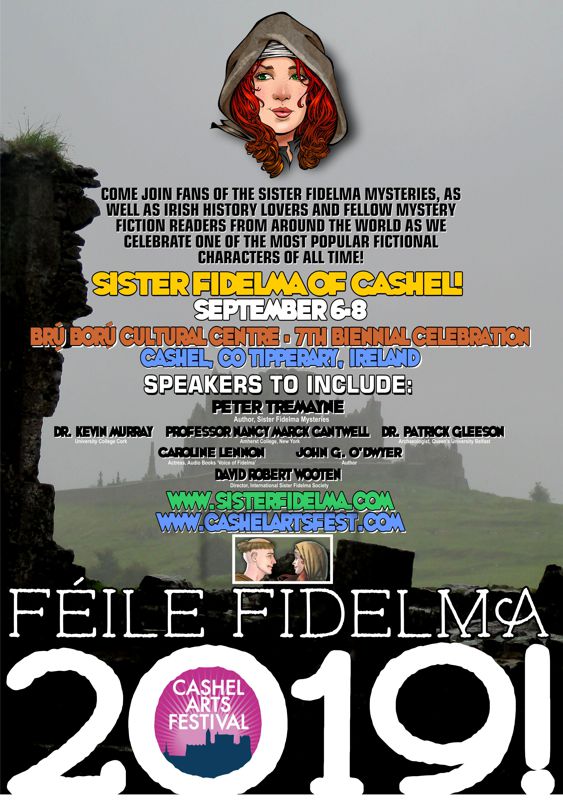
)
)
)
)
)
)
)
)
)
)
)
)
)
)
)
)
)
)
)
)
)
)
)
)
)
)
)
)
)
)
)
)
)
)
)
)
)
)
)
)
)
)
)
)
)
)
)
)
)
)
)
)
)
)
)
)
)
)
)
)
)
)
)
)
)
)
)
)
)
)
)
)
)
)
)
)
)
)
)
)
)
)
)
)
)
)
)
)
)
)
)
)
)
)
)
)
)
)
)
)
)
)
)
)
)
)
)
)
)
)
)
)
)
)
)
)
)
)
)
)
)
)
)
)
)
)
)
)
)
)
)
)
)
)
)
)
)
)
)
)
)
)
)
)
)
)
)
)
)
)
)
)
)
)
)
)
)
)
)
)
)
)
)
)
)
)
)
)
)
)
)
)
)
)
)
)
)
)
)
)
)
)
)
)
)
)
)
)
)
)
)
)
)
)
)
)
)
)
)
)
)
)
)
)
)
)
)
)
)
)
)
)
)
)
)
)
)
)
)
)
)
)
)
)
)
)
)
)
)
)
)
)
)
)
)
)
)
)
)
)
)
)
)
)
)
)
)
)
)
)
)
)
)
)
)
)
)
)
)
)
)
)
)
)
)
)
)
)
)
)
)
)
)
)
)
)
)
)
)
)
)
)
)
)
)
)
)
)
)
)
)
)
)
)
)
)
)
)
)
)
)
)
)
)
)
)
)
)
)
)
)
)
)
)
)
)
)
)
)
)
)
)
)
)
)
)
)
)
)
)
)
)
)
)
)
)
)
)
)
)
)
)
)
)
)
)
)
)
)
)
)
)
)
)
)
)
)
)
)
)
)
)
)
)
)
)
)
)
)
)
)
)
)
)
)
)
)
)
)
)
)
)
)
)
)
)
)
)
)
)
)
)
)
)
)
)
)
)
)
)
)
)
)
)
)
)
)
)
)
)
)
)
)
)
)
)
)
)
)
)
)
)
)
)
)
)
)
)
)
)
)
)
)
)
)
)
)
)
)